On The Quiet Layer
Introduction
The companies that win Physical AI categories build the data foundation first — before anyone outside the company believes it matters. Waymo did it for autonomous vehicles. Anduril did it for defense autonomy. The maritime version of this work is happening now, on quaysides, one sensor at a time.
Date
05.03.26
Author
Erkan Taș
Type
Insights
On The Quiet Layer
The sensor at the dock is not what gets investors excited.
The data ingestion pipeline is not what gets autonomy engineers excited.
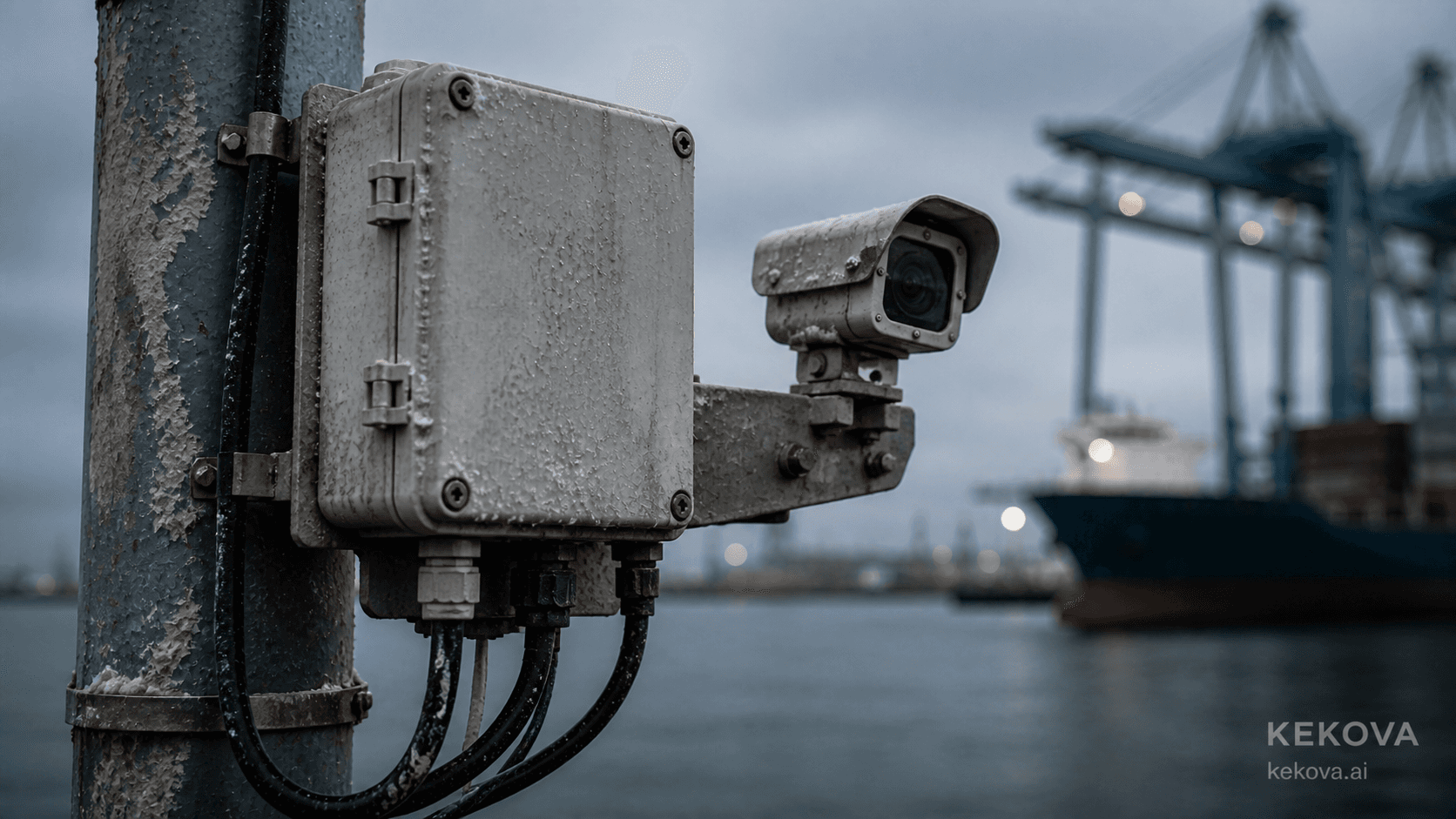
The edge-compute enclosure bolted to a light pole, weatherproofed against salt spray and precisely time-syncing multiple sensor streams, is not what gets press coverage.
It is also the reason any of the rest works.
Every major Physical AI category that has reached real-world deployment — autonomous driving, defense autonomy, robotics, industrial automation — has the same structural truth underneath it: the data layer was built first, by the company that won, before most people outside the company believed it mattered.
Waymo built sensor stacks, data infrastructure, and high-definition maps for years before the self-driving conversation focused on the intelligence layer. Anduril built the operational data and systems foundation for defense autonomy before the category had a modern platform shape. Tesla built fleet telemetry before consumer autonomy became a platform category.
In every case, the company that owned the quiet foundation became the company positioned to own the model layer that ran on it — and then the platform built on top.
Maritime has not had this.
The result is the category we have today: point tools, ungrounded digital twins, simulators that drift, and optimization systems that do not learn from the broader operating environment.
Building the foundation layer is quiet work.
Cameras. LiDAR. Radar. AIS. Hydrophones. Environmental sensors. Edge compute at every site. Time synchronization, calibration, sensor fusion, streaming, storage, and observability. Weatherproofing for one of the harshest operating environments a sensor will encounter. Working with port authorities and terminal operators on installation. Permits. Power. Network. Security. Maintenance.
It is not glamorous work.
It is the work that has to be done.
And it is the foundation everything KEKOVA builds above it depends on.
The four-beat pattern is the same one every winning Physical AI company has followed: own the data flywheel, build the model layer, expose the platform, and generalize from there.
The first beat is the quiet one.
Every port instrumented becomes a permanent contributor to the maritime data foundation. Every deployment makes the next deployment cheaper. Every sensor we ship contributes to the dataset that trains the world models, drives the simulation, and grounds the foundation model — for KEKOVA, for the autonomy developers building on the platform, and eventually for the maritime world.
The quiet layer is the layer.
— Erkan Taş
Let's Get to Work