What Ports Actually Need
Introduction
A working port is hundreds of interacting assets — vessels, berths, cranes, equipment, vehicles, people, networks, and waterways — operating under uncertainty, in real time, with consequences that compound across the global supply chain. The software stack running it was never designed as a unified learning system. What ports actually need is a real-time intelligence layer underneath the operating systems they already have.
Date
05.04.26
Author
Erkan Taș
Type
Insights
What Ports Actually Need
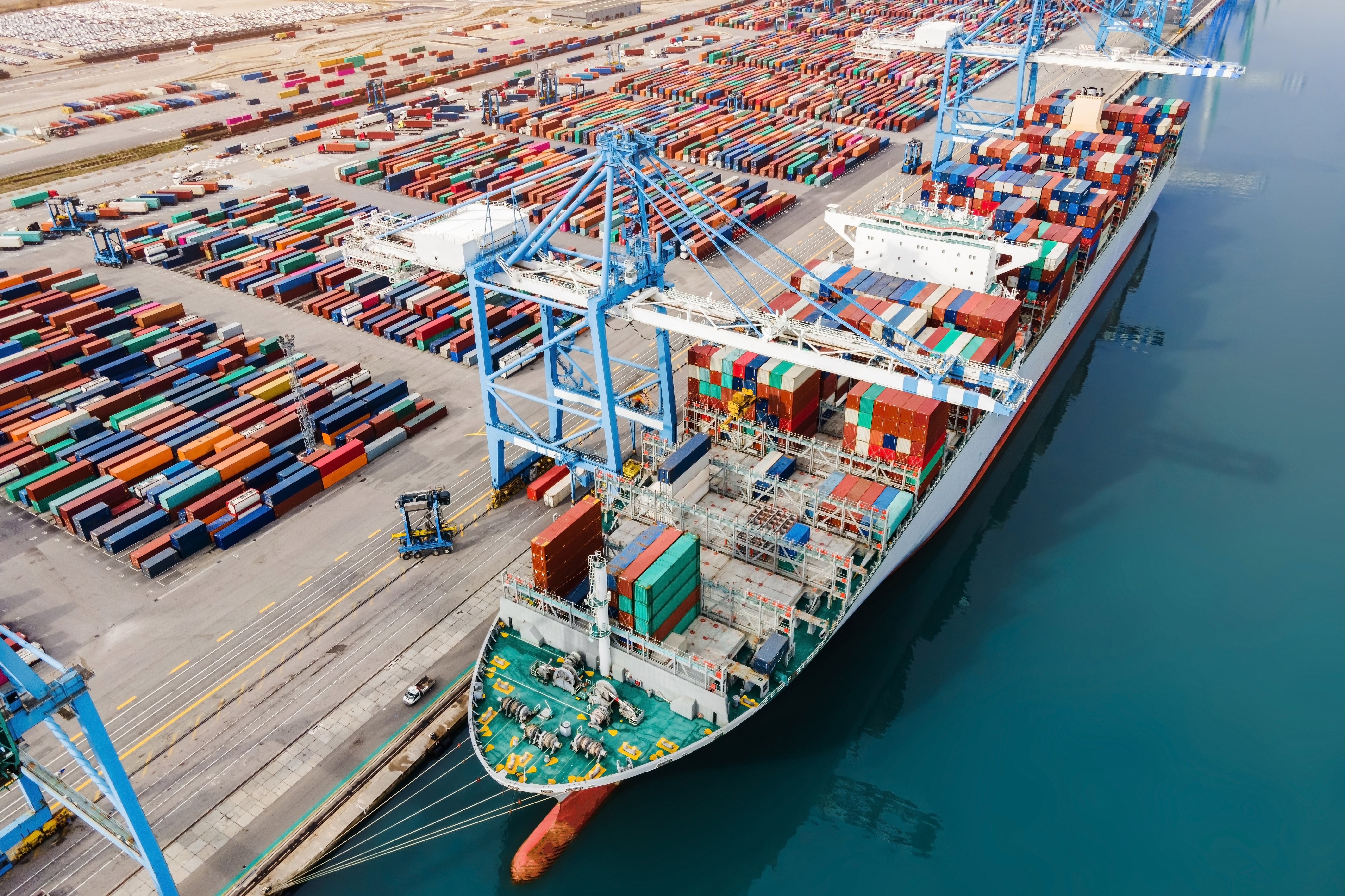
A modern container terminal handles thousands of decisions a day, made by human operators working with partial information.
Which berth for which vessel. Which crane on which bay. How to sequence yard moves when a vessel is running late, weather is rolling in, and the next vessel arrives in six hours. When to move a piece of equipment. When to call in additional labor. When to hold a truck at the gate.
Each decision is consequential.
A misallocated berth can cost a vessel hours of delay. A poorly sequenced crane operation can create material downstream costs. A missed traffic window can propagate through the terminal, the carrier schedule, the inland network, and the broader supply chain.
Ports are among the highest-throughput, highest-stakes coordination problems in global logistics.
The systems running this work were not designed for that reality.
Most ports operate on a stack assembled over decades: a terminal operating system from one vendor, a yard management system from another, crane control from a third, gate management from a fourth, vessel traffic from a fifth. Each system was built for an important function. But the stack was not built as one real-time, learning architecture.
The result is fragmentation.
Operators move between incompatible systems to make a single decision. Real-time telemetry exists in some places and not others. The operational picture is assembled manually, under pressure, by the people with the deepest experience.
The “operational picture” is a mental model the best operators carry, not a system the port runs on.
This is not a problem more dashboards solve.
It is not a problem better optimization tools solve when they sit on top of the same fragmented foundation.
It is a problem of foundational architecture.
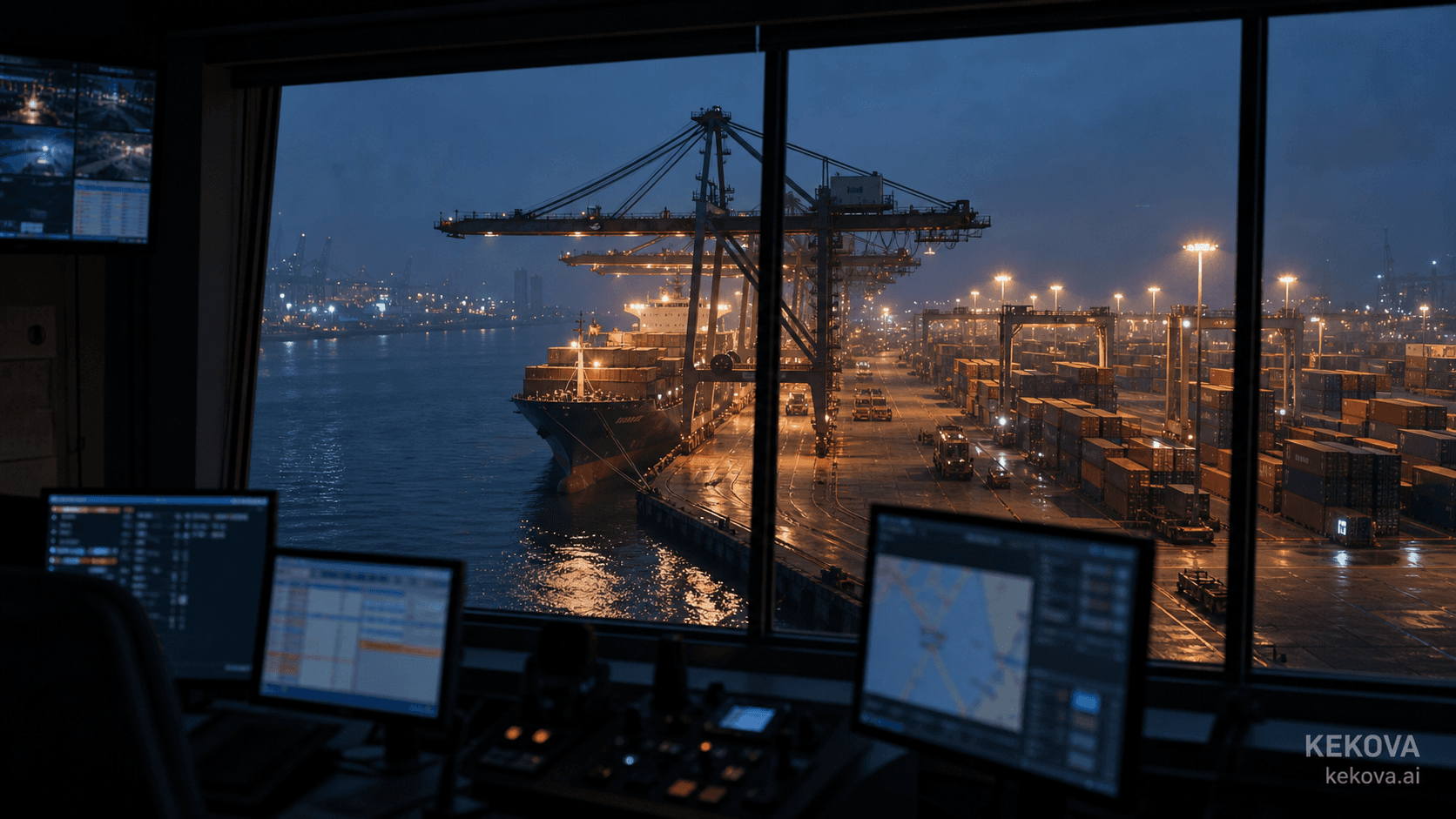
What ports actually need is a unified, real-time intelligence layer underneath the operating systems they already have — one that observes the port in real time, models how assets and decisions interact, learns from every deployment, and surfaces the operational picture the port has never had in software.
That intelligence layer has four properties.
First, it is grounded in real-time, multimodal sensor data. Cameras, LiDAR, radar, AIS, hydrophones, environmental sensors, and operational data streams are time-synchronized into a coherent view of what is happening across the terminal and its surrounding waters.
Second, it is physics-grounded. Vessel approaches, equipment movement, weather, tides, traffic flows, and operating constraints are modeled as a continuous, dynamic system rather than as disconnected status updates.
Third, it is decision-aware. Not just “what is happening,” but “what will happen if we make this choice instead of that one.” Closed-loop simulation, running on the same world model the live system observes, lets operators evaluate the consequences of decisions before committing to them.
Fourth, it scales toward autonomy. Decision support comes first. As trust grows, the same architecture can support progressively autonomous coordination for decisions that become safe, repeatable, and operationally accepted.
This is the system KEKOVA is building.
Not a dashboard.
Not a point tool.
A real-time intelligence layer for complex port operations.
The work starts with sensor infrastructure, live data ingestion, and a real-time world model of one terminal.
It scales from there.
— Erkan Taş
Let's Get to Work